Emerging Pest
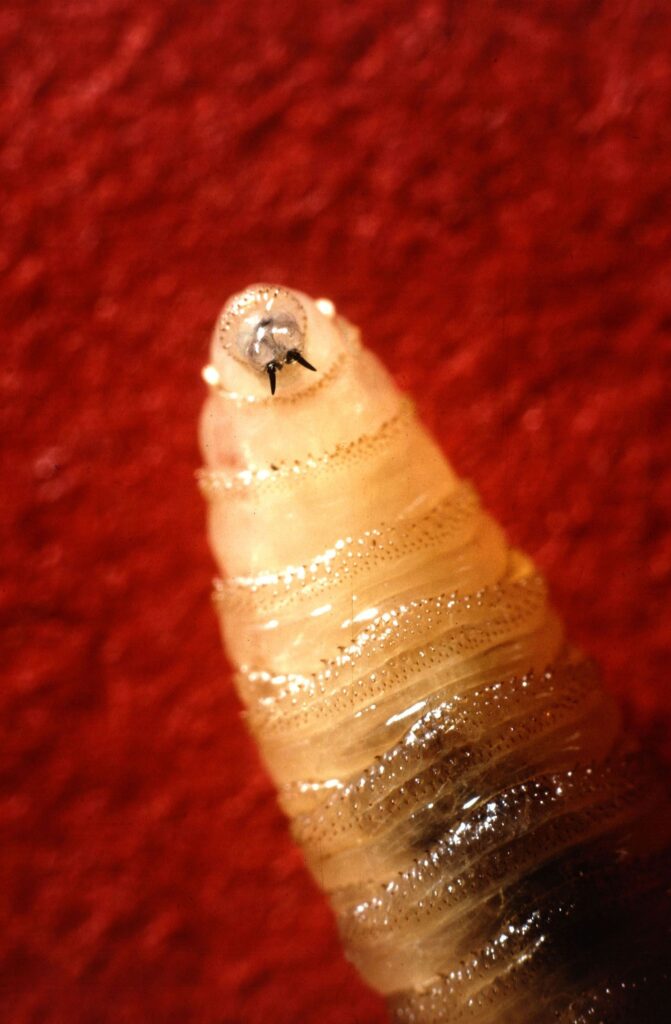
The New World screwworm (NWS) is a species of blow fly in the family Calliphoridae. Also known as the primary screwworm (Cochliomyia hominivorax), this fly received its common name because of its larval (maggot) stage’s feeding behavior in which they cause extensive damage to the living tissue of warm-blooded animals using their sharp mouth hooks to burrow into their host, similar to a screw being driven into wood.
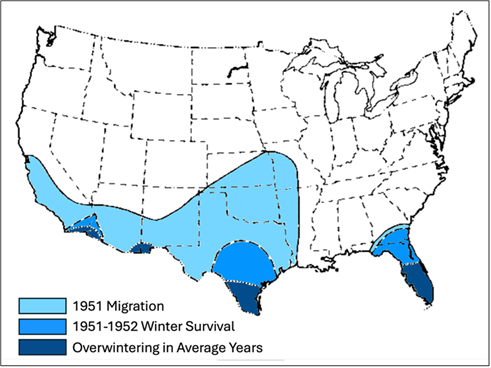
This pest is endemic in many Caribbean islands and South America. Historically, its range extended into the southern U.S., through Mexico and the Caribbean, and into South America. Control and eradication efforts removed NWS from North and Central America, and several Caribbean islands. In the 1950s, USDA researchers Raymond C. Bushland, Edward F. Knipling, and Cooper Curtis, conceived the Sterile Insect Technique (SIT), a groundbreaking approach for controlling screwworm populations. Historically, this method involves mass-rearing screwworm flies, sterilizing them using radiation and releasing sterilized pupae into the wild. Currently, the program releases chilled adult NWS flies rather than pupae. Since female screwworm flies mate only once, the idea was to use this biology to release sterile lab-raised males to mate with fertile wild populations of females. Those females would then lay unfertilized eggs, leading to a gradual decline in the population. That is, if the number of sterile flies exceeds the number of native flies, most matings will be sterile, thus reducing the native fly population. The first successful application of SIT occurred in 1954 on the island of Curaçao in the Caribbean Sea, where the screwworm was eradicated within six months. Following this success, SIT programs were launched in Florida in 1957 and expanded throughout the southeastern and southern U.S. By 1966, the screwworm was declared eradicated from the U.S.
With the establishment of the Panama-United States Commission for the Eradication and Prevention of Screwworm (also known as COPEG), a biological barrier zone in eastern Panama has been maintained since 2006, preventing NWS from moving north from South America to screwworm-free areas in Central and North America. Cooperation between countries was key to this success. Despite these successes, the screwworm has re-emerged in certain areas.
Identification and Life Cycle
Adult New World Screwworm (NWS) flies have orange eyes, metallic blue/green bodies and three dark stripes on their backs. The middle line is incomplete, in a way that it stops before it reaches the ‘neck’ of the fly. They are slightly larger than a house fly. Infestation of NWS starts with a female fly laying eggs on open wounds (e.g., cuts, scrapes, castration, dehorning, branding, ear tagging, or healing umbilical cords of newborn animals) of living, warm-blooded animal. A wound as small as a tick bite can give off an odor that attracts the female NWS flies. In her lifetime and after a single mating, a female NWS fly can lay up to 200 eggs per egg mass. Within six to eight hours of oviposition, eggs hatch into larvae (maggots), which then burrow further into wounds as they feed with their hook-like mouth parts. As larvae continue to feed, the wound can worsen, attracting more egg-laying flies. Larvae will continue to feed for approximately seven days, while molting through 3 larval instars, before dropping to the ground to burrow into the soil and pupate. Depending on the temperature and humidity, adult flies will emerge from the soil 7-54 days later.
A Similar Species: Secondary Screwworm
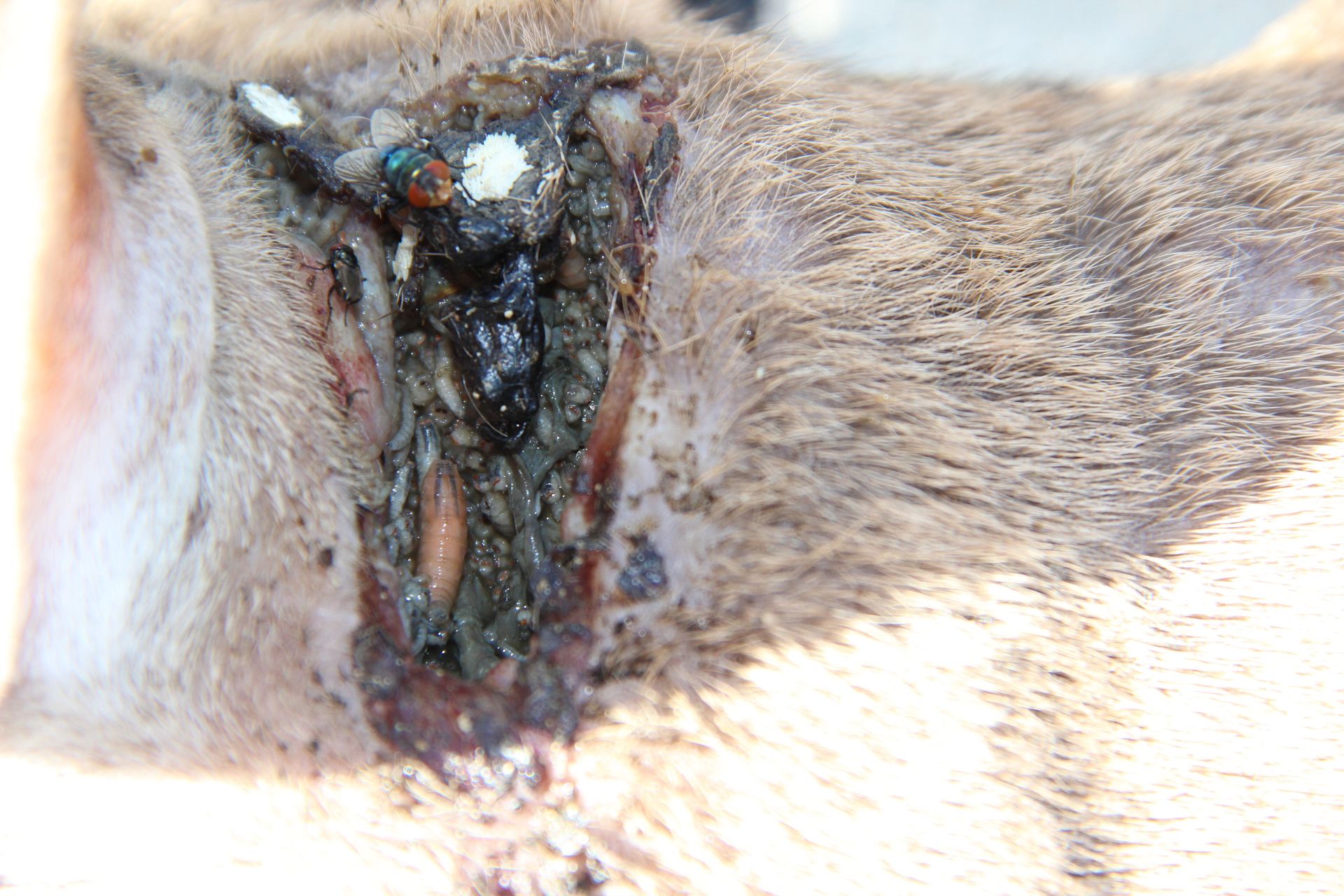
A related species, the secondary screwworm (Cochliomyia macellaria), is commonly found throughout the U.S. Unlike NWS, secondary screwworms typically infest wounds or tissues that are already dead, rather than living tissue. It is possible that both NWS and secondary screwworm could be found together in a wound. NWS larvae are larger and have more robust mouth hooks with distinctive dark pigmentation, while secondary screwworm larvae are smaller, paler, and have less pronounced mouth hooks.

Geographic Distribution
NWS is a tropical species unable to overwinter in temperate regions, which includes Tennessee. NWS is endemic in many Caribbean islands and South America. While the barrier zone in the Darien Province of eastern Panama had been maintained since 2006, this zone was breached in 2023. Since then, NWS has been detected in Costa Rica, Nicaragua, Honduras, Guatemala, Belize, El Salvador and Mexico. In 2023, the biological barrier zone in Panama was breached by the fly, leading to an unprecedented number of NWS cases in Panama. Subsequently, cases have been detected in every Central American country and Mexico. On November 22, 2024, the Chief Veterinary Officer of Mexico notified USDA’s Animal and Plant Health Inspection Service (APHIS) of a positive detection of NWS in a cow in Chiapas, near the Guatemala border. This detection prompted increased surveillance and preventive measures to reduce the risk of northward spread of this pest. Refer to the Online Resources below for a link to view the current outbreak range. The current status of NWS populations can be monitored at Current Status of New World Screwworm | Screwworm.gov .
Economic and Agricultural Impact
The first documentation of NWS infestations in the U.S. territory was reported in the early 1830s in Texas. It wasn’t until 1933 that NWS was considered a major problem in the southeastern U.S. when it caused substantial animal suffering and economic losses. In the 1930s and 1940s, livestock producers faced annual losses of an estimated $10-$20 million (≈250-500 million in 2025 dollars) due to screwworm infestations in their cattle. These losses stemmed from animal deaths, decreased production, increased veterinary costs and additional labor for inspection and treatment.
As of January 2026, the NWS has not been found in the U.S.; however, there is concern that the outbreak could further expand into the U.S., primarily due to the movement of animals. This parasitic fly is particularly devastating because the larvae (maggots) feed on the living tissue of their host. Damage occurs when the larvae hatch from their eggs and bore into animal tissue and feed on living flesh, expanding the wound. Infested wounds are very attractive to gravid (egg-laying) females, resulting in the deposition of additional eggs, enlargement of the wound and eventually, death of the host. All warm-blooded animals are at risk, including livestock, pets, wildlife, and humans.
Surveillance and Diagnosis
Inspect
Inspect for signs of maggots which include the smell of rotting tissue, visible burrowing larvae, and abnormal (enlarging) looking wounds on both livestock and wildlife. Suspect cases should be reported even if unsure.
Regularly inspect animals for signs of infestation, such as unexplained wounds, maggots in wounds, foul odors or behavioral changes. Specifically, keep an eye out for:
- Wounds or body openings (such as nose, ears, umbilicus, or genitalia) that are draining or enlarging
- Maggots in wounds
- Animals that appear depressed, go off feed and/or separate themselves from the herd
- Know that NWS can burrow deep into a wound and that NWS infested wounds often can have a very small external opening but expand greatly under the skin.
While maggots of other necrophagous species of blow flies may be visible on the surface of the wound, NWS maggots will usually be deep in the freshest portions of the wound.
Collect
Collect any larvae (maggots) found on a living animal in an ethanol-based solution (e.g., hand sanitizer).
If you suspect the maggots are NWS, IMMEDIATELY contact your veterinarian and report them to your state department of agriculture.
In Tennessee, please contact your veterinarian and contact the Tennessee Department of Agriculture.
State Veterinarian’s office 615-837-5120 (business hours) or 866-536-7593 (weekends/evenings)
USDA Area Veterinarian 615-517-2642
Do not delay reporting. Early detection limits spread and minimize long-term consequences. If you think you have found a screwworm, report it immediately to your State Animal Health Official and APHIS office. This will allow APHIS and partner agencies to respond quickly and remove the screwworms before a population becomes established.
This is mandated by law to collect and submit the maggots for identification to USDA’s National Veterinary Services Laboratory in Ames, Iowa.
If you suspect NWS, contact the State Veterinarian’s office at 615-837-5120 or the USDA Area Veterinarian in Charge at 615-517-2642. On weekends and evenings, call 866-536-7593. Suspicious cases will be evaluated, and samples may be submitted for laboratory confirmation. The Tennessee Department of Agriculture Animal Health Division will assist veterinarians with sample collection and submission. Any suspect samples MUST be collected and sent in for Identification with USDA National Veterinary Services Laboratories.
Protect
Protect your animals with biosecurity measures coupled with good animal husbandry. Good ectoparasite management will prevent bites from other blood-feeding parasites such as ticks, stable flies, and horn flies.
Prevent wounds from occurring and treat them promptly. For example, treat all umbilicus of newborns and other wounds with products that speed drying and healing.
Plan Ahead. Maintain and improve facilities to prevent injuries. Time follow-up practices based on seasonal risk. For example, during cooler seasons producers should calve/lamb/kid, castrate, ear tag or brand, dehorn, dock tails, shear, implant placement. While during warmer season with fly season is more common, reconsider any elective wound-causing tasks, apply fly repellent at working facilities, increase frequency of livestock checks, promptly treat all wounds, and cover surgical wounds if possible.
Stay Informed
The best defense is knowing what to look for and acting fast. The USDA and Tennessee Department of Agriculture will provide updates if the situation changes. For more information, visit the USDA’s NWS website.
Import Responsibly: Purchase animals from reputable sources and always quarantine new animals brought onto your property.
Travel Cautiously: If traveling internationally with pets or across state lines with livestock, ensure they are inspected for screwworm according to USDA APHIS guidelines. Additionally, if you are in an NWS-infested area, be sure to check your vehicle for screwworm flies.
Additional Resources
- New World Screwworm
- Pest Alert: New World Screwworm
- New World Screwworm What You Need to Know
- If you are a veterinarian or animal health official, below are links to USDA APHIS standard operating procedures for possible NWS detection:
- Link to Pesticides to Potentially use against NWS:
- Online Resources Mentioned in the Text:
- New World Screwworm Outbreak in Central America and Mexico Current Distribution Map:
- CDC Myiasis Overview
- USDA APHIS Dog Import Guidelines
- USDA APHIS New World Screwworm
- UTIA Fact Sheet W1338 – Species Highlight: New world Screwworm
- Bushland, R.C. 1985. Eradication program in the southwestern United States. Symposium on the eradication of the screwworm from the United States and Mexico. Miscellaneous Publication. Entomological Society of America 62: 12-15.