Summary
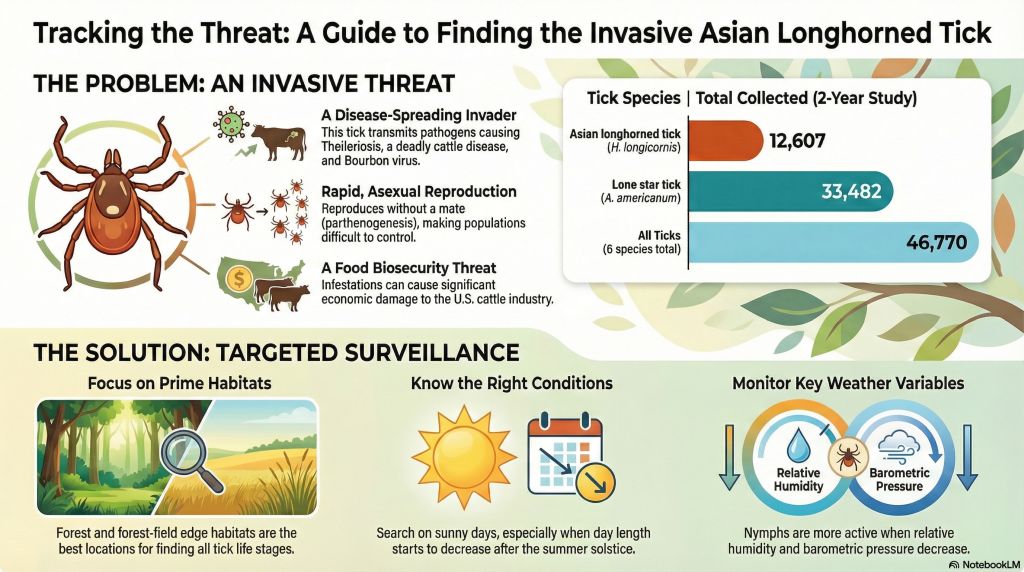
This research article investigates the environmental factors that influence the activity and presence of Haemaphysalis longicornis, an invasive species recently discovered in Tennessee. Through extensive field surveillance on local farms, researchers identified that habitat type, seasonal changes, and climatic conditions like humidity and barometric pressure act as significant predictors for the tick’s abundance. The study highlights that these ticks are most prevalent in forest-field edge habitats and exhibit distinct questing behaviors during the summer and spring. By understanding these ecological triggers, health officials can develop more effective targeted surveillance programs and management strategies for the cattle industry. Furthermore, the findings suggest that monitoring other common tick species can help anticipate the spread of this exotic pest. These data-driven insights are essential for establishing biosecurity measures against the pathogens this invasive species may carry.
Link to paper: https://doi.org/10.1371/journal.pone.0292595
NOTE: Infographic and initial draft summary were generated by Google NotebookLM