Haemaphysalis longicornis & Theileria orientalis Ikeda in the United States
Overview
The introduction and spread of the Asian longhorned ticks (Haemaphysalis longicornis) in the United States have raised significant concerns for animal health, given their role as a vector of Theileria orientalis genotype Ikeda, a protozoan parasite that causes severe disease in cattle. Since its first detection in the U.S. in 2017, this tick has expanded rapidly and is now established in multiple states, posing ongoing risks to livestock production.
The Vector: Haemaphysalis longicornis
Identification and Biology
Haemaphysalis longicornis is a small, reddish-brown hard tick native to East Asia. Key characteristics include no markings on their back and a large spur on the basal palpal segment. Immature stages are very small. A unique feature of this species is its ability to reproduce parthenogenetically, meaning females can produce viable offspring without mating. This trait enables rapid population growth and high levels of infestation on hosts and in the environment.
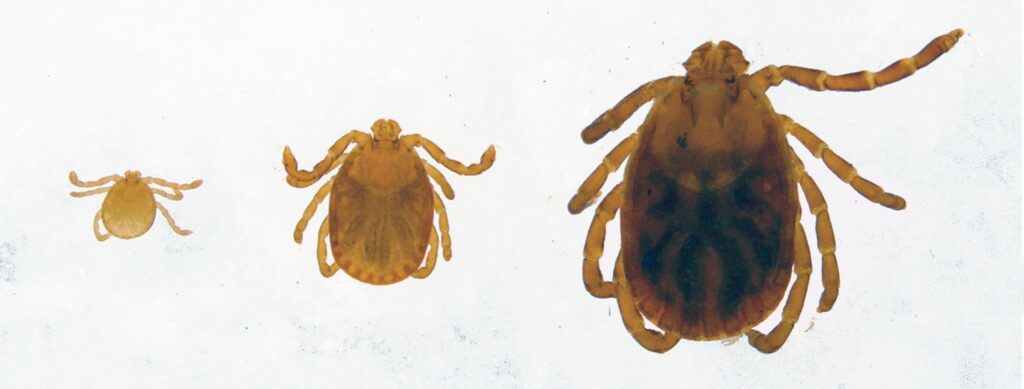
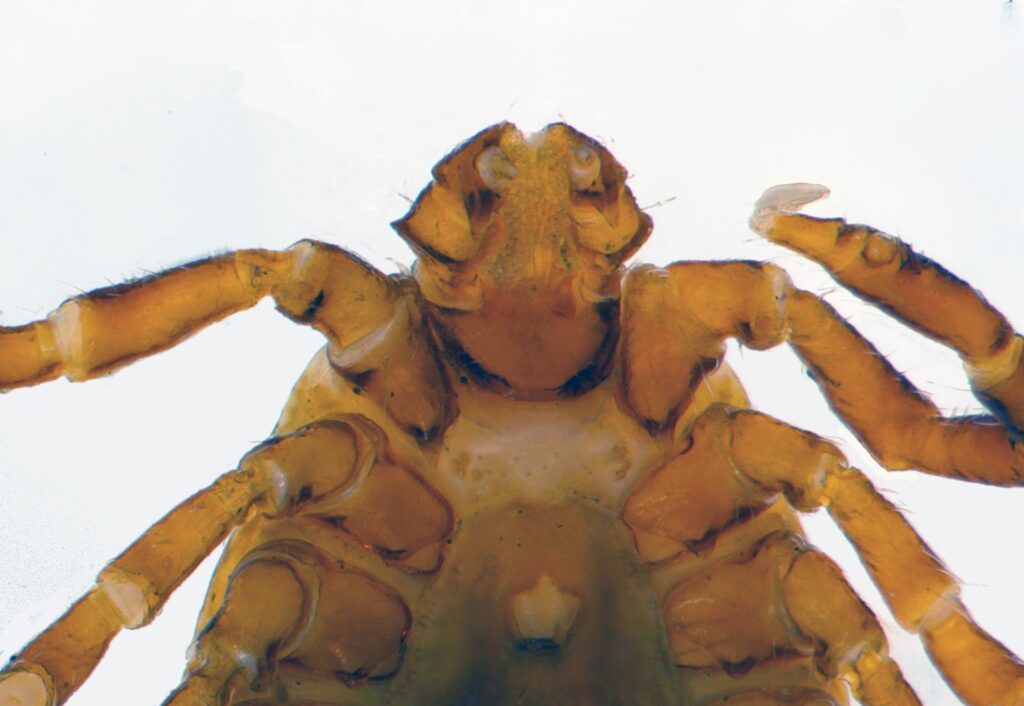
Habitats and Hosts
Since its initial discovery, H. longicornis has been confirmed in numerous eastern and central U.S. states. It is commonly found in pastures and tall grasses, woodland edges, and livestock operations and wildlife habitats. Life stages respond differently to climatic conditions, and population dynamics are influenced by other tick species. The tick feeds on a wide range of hosts, including cattle, sheep, goats, horses, wildlife, companion animals, and humans. This tick species is more often found on the underside of animals compared to the ears, neck, or head regions.
Lifecycle
This species has a unique reproductive strategy in which females reproduce asexually (clonally), allowing a single tick to establish a new population. Longhorned ticks can complete their life cycle in as little as six months—much faster than the two- to three-year life cycle of native Tennessee ticks—and may produce multiple generations per year. Because a single nymph can molt into a reproductive adult female, translocation of one tick may be sufficient for population establishment.
The longhorned tick is a three-host tick, feeding on a different host at each life stage (larva, nymph, adult). After each blood meal, the tick drops off the host to molt or, in the case of adult females, to lay up to 2,000 eggs in leaf litter. Larvae hatch, feed, and molt into nymphs, which then feed on a new host and molt into adults.
University of Tennessee data indicate that nymphs are likely the primary overwintering stage, becoming active from March through September (peaking in spring). Adults are active April through September (peaking in summer), and larvae from April through November (peaking in fall). In warm areas with abundant hosts, all life stages may be active simultaneously, and development from egg to adult can occur within six months.
Figure 3. Distribution of Haemaphysalis longicornis in North America through December 2025 (red counties are established, orange counties are reported, and gray counties do not have data). Created by McClelland and Short.
The Pathogen: Theileria orientalis Ikeda
The Protozoan Parasite
Theileria orientalis is a tick-borne protozoan parasite that infects red blood cells in cattle. Among its genotypes, Ikeda is considered the most pathogenic and is responsible for significant clinical disease and production losses.
Disease in Cattle (Theileriosis)
Cattle infected with T. orientalis Ikeda may develop severe anemia, lethargy and weakness, jaundice, reduced weight gain and milk production, abortions, and death in severe cases. Adult cattle, particularly naïve animals with no prior exposure, are most severely affected. There is currently no approved treatment or commercial vaccine for T. orientalis Ikeda in the United States.
Transmission Cycle
- H. longicornis acquires T. orientalis Ikeda while feeding on infected cattle.
- The parasite is maintained in the tick and transmitted to new cattle during subsequent blood meals.
- Wildlife and other tick species are not currently known to play a major role in maintaining Ikeda in the U.S., making cattle–tick–cattle transmission the primary concern.
Economic and Agricultural Impact
The emergence of T. orientalis Ikeda threatens beef and dairy cattle health, farm profitability due to production losses, animal welfare, and increased costs for tick control and surveillance. Outbreaks have resulted in substantial economic losses for affected producers, particularly in regions where the tick is newly established.
Figure 4. National distribution of Theileria orientalis Ikeda detected in the vector (green), cattle (orange), both (red), or no data (gray). Created by McClelland and Short.
Surveillance and Diagnosis
Diagnosis of T. orientalis Ikeda typically involves blood smear evaluation (limited sensitivity) followed by PCR testing to confirm infection and identify the Ikeda genotype. State and federal agencies, veterinary diagnostic laboratories, and universities play a critical role in monitoring tick distribution and disease occurrence.
Prevention and Control
Tick Management
Effective control focuses on reducing tick exposure including regular inspection of cattle, strategic use of approved acaricides, pasture management (mowing, brush control), and excluding wildlife where feasible.
Biosecurity
Biosecurity measures are important to protect animals from this vector and vector-borne disease. Producers should quarantine and inspect new or returning cattle, clean and inspect equipment and vehicles that move between farms, and report unusual illness or tick infestations to veterinarians or state animal health officials.
Early Detection
Early detection and prevention are critical to limiting H. longicornis onto properties. Because ticks are active as early as March, monitoring efforts should begin when daylength increases and continue until it decreases. Regularly inspect animals—especially the head, ears, armpits, groin, and tail head, and check as frequently as possible (every 2-3 weeks if possible). Additionally, when introducing new animals onto your property, first isolate them, inspect them for ticks, and then apply an appropriate acaricide with a two-week efficacy.
Integrated Pest Management
We recommend using an integrated pest management approach, combining cultural, mechanical, and chemical control methods to reduce tick populations. Cultural controls (habitat modification) include keeping grass and weeds trimmed and clearing overgrown brush in pastures and yards. We recommend bushhogging pastures regularly to “knee high” to minimize suitable tick habitat. After mowing but before transporting, equipment should be treated with an appropriately labeled acaricide to prevent accidental introductions or potential tick movement from pasture to pasture.
Under the advisement of your veterinarian, chemical control options can also be explored. Appropriately labeled on-animal acaricides such as ear tags, pour-ons, and sprays have shown to be beneficial in controlling longhorned ticks, as these ticks are currently susceptible to pyrethroid products. However, relying solely on chemical control options is costly and could lead to rapid development of acaricide resistance, which would render these products ineffective, particularly in clonal ticks like the longhorned tick.
Help us track H. longicornis and T. orientalis lkeda, and learn more about other ticks and tick-borne pathogens too
If you find a tick attached to a person, pet, or livestock, remove it immediately. If available, use fine-tipped tweezers to remove the tick. If you do not have tweezers, use tissue paper to help grip the tick. Grasp the tick as close to the skin as possible and gently pull the tick out with steady and even pressure. It is important not to twist or jerk when pulling the tick out as this may lead to the mouthparts remaining embedded, which will increase the risk of infection. Do not use nail polish, petroleum jelly, alcohol, or hot matches to remove the tick. Wash the wound with soap and water and apply an antiseptic after the tick is removed. Place the removed tick into a sealable bag. Label the bag with host (person or animal), date, geographic location of removal. Removed ticks should be stored in a freezer for a few months in case any disease symptoms develop, and/or the tick needs to be identified.
Ticks can be submitted to your local county Extension agent or directly to the University of Tennessee for identification using their intake form.
Additional Resources
For more information, contact:
- Your state department of agriculture, such as the Tennessee Department of Agriculture
- University Extension services, such as UT Extension
- Veterinary diagnostic laboratories, such as TDA Kord Animal Health Diagnostic Lab
- USDA Animal and Plant Health Inspection Service (APHIS)
- University of Tennessee Institute of Agriculture Factsheet on Haemaphysalis longicornis and Theileria orientalis Ikeda