Summary
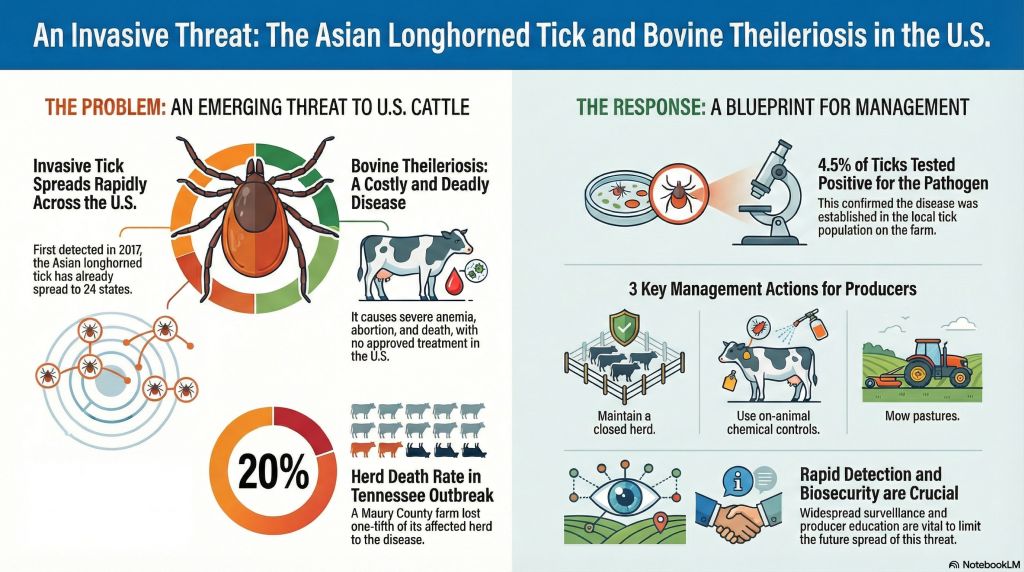
This study documents the first confirmed instance of the invasive Haemaphysalis longicornis and the virulent Theileria orientalis Ikeda pathogen on a Tennessee cattle farm. Researchers investigated a local herd after it suffered a 20% mortality rate, discovering that the invasive ticks persisted in the environment for over a year following the initial disease outbreak. The findings highlight the economic threat posed by bovine theileriosis, which causes severe anemia and growth loss in livestock across the United States. To mitigate the spread, the authors suggest integrated pest management strategies, including chemical treatments, pasture maintenance, and maintaining closed herds. Ultimately, the report emphasizes the urgent need for rapid detection protocols and increased producer education to manage this emerging biosecurity risk. These efforts are vital for safeguarding the agricultural productivity and sustainability of the American cattle industry.
Link to paper: https://doi.org/10.1111/mve.70043
NOTE: Infographic and initial draft summary were generated by Google NotebookLM