June 22, 2026 (Zoom)
Trout Fryxell RT, KV Smith, and JC Chandler. Minutes of the National Exotic and Invasive Vector Species Stakeholder Call. 22 June 2026. Knoxville, TN/Zoom.
Meeting notes were initially reported with Zoom AI and edited by the team at the University of Tennessee.
126 participants of 395 invited (31.9%)
Next meeting July 20th at 11:00 AM; Report new detections to NVSL to update the map(s).
Quick recap
This was a National Exotic and Invasive Pest Species Stakeholder Meeting led by Becky Trout Fryxell from the University of Tennessee, helping to coordinate conversation and responses to tick infestations across multiple states. The meeting briefly mentioned updates on New World Screwworm detected in Texas and New Mexico, followed by a rapid roll call where state representatives reported on new county detections and surveillance activities. Key updates included Alabama reporting its first state detection, Kentucky adding Cumberland County, and several states like Delaware, Georgia, and Pennsylvania reporting increased collections of Asian longhorn ticks across multiple life stages. Cassandra Olds from Kansas State University provided detailed insights on challenges with out-of-state cattle bringing in ticks, noting that Kansas receives over a million head of cattle annually from endemic states, and discussed potential fly-based transmission of Theileria. The discussion included treatment recommendations for tick-infested livestock, with pyrethroid sprays being recommended over injectable ivermectin due to concerns about nematode resistance and treatment duration. The conversation ended with discussions about surveillance methods, particularly focusing on collecting ticks along habitat edges, cattle trails, and locations where infected animals were found, with participants sharing protocols and coordination efforts across state borders.
Next steps/notes
- Amar- Check and submit the new county detection in New Jersey to Katy for the map.
- Joellen- Send an email to Patti (Vermont) to connect and share the surveillance protocol.
- Ken Wise- Send the link to the press release about high populations of Longhorn tick in Columbia County, NY.
- Steve Struberg- Update the Missouri map on the website with the new county records and send the link to Katy if needed.
Collaboration
- Attendees with new detections: Contact NVSL with new detections and inform Becky/Katy for map updates.
Summary
Haemaphysalis longicornis Updates
The group discussed approaches to tick surveillance. Participants shared surveillance updates from their regions, with notable increases in tick collections and detections in multiple states including New Jersey, Pennsylvania, and New York, where Ken reported a significant surge in tick populations in Columbia County. The meeting established protocols for sharing information and confirmed that no new host species had been detected, with primary findings continuing in cattle, dogs, white-tailed deer, raccoons, and humans.
The approach for tick surveillance and detection was discussed as well. Becky shared her experience from Tennessee where they focus on edge habitats and collect ticks along trails and near where animal deaths occurred. Patti and Joellen discussed coordinating their surveillance efforts in Vermont and New York, with Joellen mentioning they collect vegetation data as part of their protocol. The group also noted that longhorned ticks detach quickly from hosts and flags.
Once detected, tick treatment methods were also discussed. Cassandra discussed tick treatment approaches, noting that effective methods vary by location and that pyrethroid sprays are generally more effective than injectable ivermectin for killing ticks. She explained that while injectable ivermectin can reduce tick populations over time and decrease reproductive capacity of the tick, it may not kill ticks as effectively as a pyrethroid spray that covers the entire animal’s body. Dina raised a question about treating horses and donkeys, and Cassandra explained that treating ticks on horses is challenging due to their sensitive skin and limited treatment options, noting that continuous use of ivermectin could increase resistance to gastrointestinal nematodes. The group discussed the impact of Asian longhorn ticks on goats, with Dina inquiring about potential effects and exploring the possibility of using goats for biological control. Becky and Hannah Tiffin shared their experiences and observations, noting that while goats are known to host ticks, specific information about Asian longhorn ticks on goats is limited.
Management Strategies
Cassandra Olds, livestock entomologist for Kansas State University, discussed Kansas’s unique challenges with Theileria, including high cattle movement from endemic states and potential fly-based transmission. She explained that Kansas pays 75% indemnity for Theileria-positive cattle deaths after certification by a veterinarian, though this process has limitations. Cassandra noted that Kansas has implemented tick surveillance efforts and is investigating potential vector competence for stable flies, while also working to establish a standardized necropsy protocol to better understand disease pathology and outcomes. The group discussed that while treating animals can reduce tick populations, the reapplication required for repellents presents ongoing challenges. The conversation also touched on the use of fluralaner, a tick control product for cattle, and its potential application for other animals, though its approval for horses and withdrawal periods were noted as unclear.
Patti from Vermont raised concerns about a recent case of cattle tick-borne illness in an area bordering regions with reported longhorn tick presence, seeking guidance on detection methods and timing for searching for the ticks in their area.
New State (1) and County (7) Records
- Alabama reported
- Kentucky reported 5 nymphs from Dale Hollow St Park in Cumberland County on June 5
- Indiana reported 1 nymph collected on May 28
- Illinois reported ticks collected at a sale barn with animals from Wayne and Marion counties
- Missouri reported 9 females from a cow in Barry County on April 22 and 7 females from a cow from Wright County on May 16
| State/Jurisdiction | Potential Counties | Number Counties with Detections | Percent Infected |
|---|---|---|---|
| Washington DC | 1 | 1 | 100% |
| New Jersey | 21 | 21 | 100% |
| Delaware | 3 | 3 | 100% |
| West Virginia | 55 | 37 | 67% |
| Rhode Island | 5 | 3 | 60% |
| Connecticut | 8 | 4 | 50% |
| Pennsylvania | 67 | 34 | 51% |
| Maryland | 24 | 11 | 46% |
| Virginia | 134 | 50 | 37% |
| North Carolina | 100 | 36 | 36% |
| Massachusetts | 14 | 4 | 29% |
| New York | 62 | 19 | 31% |
| Ohio | 88 | 27 | 31% |
| Kentucky | 120 | 18 | 15% |
| Tennessee | 95 | 13 | 14% |
| South Carolina | 46 | 4 | 9% |
| Arkansas | 75 | 8 | 11% |
| Indiana | 92 | 7 | 8% |
| Missouri | 115 | 9 | 8% |
| Maine | 16 | 1 | 6% |
| Illinois | 102 | 6 | 6% |
| Oklahoma | 77 | 2 | 3% |
| Georgia | 159 | 4 | 3% |
| Iowa | 99 | 3 | 3% |
| Michigan | 83 | 1 | 1% |
| Kansas | 105 | 1 | 1% |
| New Hampshire | 10 | 1 | 10% |
| Alabama | 67 | 1 | 1% |
Haemaphysalis longicornis Distribution June 2026
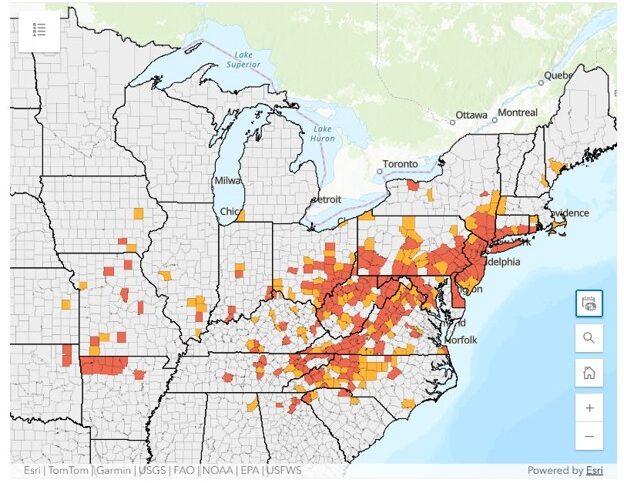
Figure 1. Red counties are considered established with Asian longhorned ticks, orange counties are considered reported with Asian longhorned ticks.
Help update the tick distribution map and Ikeda maps by filling out this form.
No new host records
New World Screwworm Updates
June 22, 2026; USDA APHIS dashboard reporting 15 cases in the United States. Three of them are now inactive and 12 are active (orange) and include cattle, sheep, and goats. More information can be found on their dashboard and through the New World Screwworm Response Playbook.
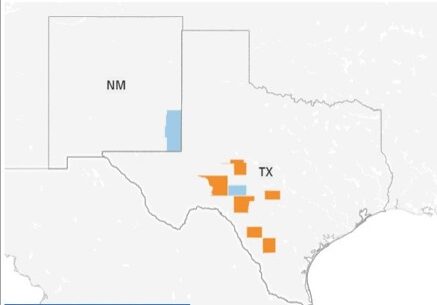
Figure 2. Map of Counties with Detections Last 30 Days